Discover Sant Salvador de la Vedella: An Iconic Village Abandoned in Spain
Take a look at Sant Salvador de la Vedella, an abandoned and hauntingly quiet site near Barcelona, Spain, through the panoramic images available on Google Maps Street View below. These immersive views let you scan the weathered stonework, the surrounding landscape, and the subtle details that make this location so compelling to urban explorers.
For anyone drawn to forgotten places with real atmosphere, Sant Salvador de la Vedella offers a rare chance to study a partially lost landmark from multiple angles without stepping on-site. Use the panoramas to slow down, zoom in, and appreciate the textures, structure, and setting that define this abandoned destination.
Photo by: Alex Edo
Photo by: Jacinto rodriguez
Urban explorers have long been enchanted by the echoes of history and whispers of mystery found within the walls of abandoned locations. Few sites embody this allure as vividly as Sant Salvador de la Vedella, a hauntingly picturesque village submerged in time and partially submerged in water, located near the Pantà de la Baells in Barcelona, Spain.
A Historical Gem Hidden in Time
Sant Salvador de la Vedella traces its origins back to the medieval era. Historical records indicate that the earliest structures were built around the 9th century, a period marked by the region’s transition from Moorish to Christian rule. The village’s most prominent structure, the church of Sant Salvador, was constructed in Romanesque style, common in the early medieval period. The stone-built chapel and surrounding buildings, set against the dramatic backdrop of lush Spanish countryside, encapsulate centuries of history.
The village was initially a flourishing community, benefiting from its strategic location along key trade routes and fertile surroundings. For centuries, Sant Salvador de la Vedella functioned as a self-sustaining village, its community bound by farming, trade, and shared religious practices.
The Flourishing Years
Sant Salvador de la Vedella experienced significant growth during the medieval period. The local community thrived on agriculture, primarily vineyards and olive groves, typical staples of rural Spain. The village also enjoyed relative prosperity through small-scale commerce and crafts, particularly pottery and textiles.
At the heart of village life stood the church, around which community gatherings and religious ceremonies provided villagers with a strong communal identity. Sant Salvador de la Vedella wasn’t just a place to live; it was a vibrant, thriving community enriched by cultural traditions and communal values.
Why Sant Salvador de la Vedella Was Abandoned
The abandonment of Sant Salvador de la Vedella began gradually but culminated dramatically in the 20th century. By the late 19th century, economic shifts and urbanization had drawn younger generations towards larger towns and cities in pursuit of better opportunities. The village population dwindled as families left, gradually turning the vibrant community into a quiet ghost town.
The decisive factor leading to the village’s abandonment, however, was the construction of the Baells Reservoir (Pantà de la Baells) in the early 1970s. Designed to regulate the flow of the River Llobregat, supply drinking water, and generate hydroelectric power, the reservoir’s creation necessitated flooding the valley, submerging several settlements, including portions of Sant Salvador de la Vedella.
The village residents, by then few in number, were relocated to neighboring towns, leaving behind homes, livelihoods, and memories, effectively sealing the fate of the historic settlement. Since the 1970s, Sant Salvador de la Vedella has stood as an iconic symbol of loss, resilience, and the powerful impact of human intervention on the environment.
Current State and Appeal for Urban Exploring in Spain
Today, Sant Salvador de la Vedella is partially submerged beneath the waters of Pantà de la Baells, visible and accessible only when reservoir levels drop, usually during prolonged droughts or water management activities. Urban explorers from Spain and beyond visit in hopes of capturing glimpses of this partially sunken village, particularly its striking church which occasionally emerges dramatically from the waters.
The site is hauntingly beautiful and uniquely photogenic. The juxtaposition of medieval ruins against the modern, serene waterscape has an irresistible allure, drawing photographers, historians, and adventure enthusiasts alike. The remnants of homes, old streets, and the impressive Romanesque church offer a stark reminder of the life that once thrived here, providing a tangible connection to the past.
Safety Tips for Urban Explorers
While the ruins of Sant Salvador de la Vedella offer an exciting adventure for urban explorers, it’s crucial to prioritize safety. Due to its partial submersion, conditions can be unpredictable and challenging:
- Check Water Levels: Visit during periods when water levels are low. Check local water authority reports for safe visiting times.
- Wear Appropriate Gear: Waterproof boots and weather-appropriate clothing are essential. Slippery stones and uneven surfaces pose potential hazards.
- Avoid Solo Exploration: Always explore with a companion. The isolation and challenging terrain require caution.
- Respect the Site: Preserve history by refraining from vandalizing or removing artifacts.
Historical Significance
Sant Salvador de la Vedella serves as a powerful testament to the historical forces shaping rural communities in Spain. Its abandonment illustrates the broader narrative of urban migration and economic change. It also highlights the consequences of modern infrastructure development, providing a poignant reminder of the delicate balance between progress and preservation.
This submerged village symbolizes resilience, illustrating how nature can reclaim human settlements. It also stands as a reminder of the importance of conserving historical landmarks, ensuring future generations can appreciate their heritage.
Exploring Beyond Sant Salvador de la Vedella
While Sant Salvador de la Vedella is captivating, the region around Pantà de la Baells and Barcelona is rich in opportunities for urban exploring in Spain. Nearby abandoned farmhouses, factories, and villages provide diverse and fascinating sites for those passionate about discovering history firsthand. Barcelona and its surrounding regions are treasure troves of abandoned places, each with unique stories to uncover.
Final Thoughts
Sant Salvador de la Vedella is more than just a deserted village; it’s a vivid portal into Spain’s complex and layered history. Whether drawn by the beauty of ruins reclaimed by nature, the poignant history of displacement, or the sheer thrill of exploration, visiting Sant Salvador de la Vedella offers a profound and unforgettable experience.
For urban explorers passionate about uncovering the hidden and abandoned gems in Spain, Sant Salvador de la Vedella is undoubtedly a must-see. Plan your visit carefully, explore responsibly, and allow yourself to be transported through the fascinating pages of history.
If you liked this blog post, you might be interested in learning about the Rivers State Prison in Georgia, the Frontier Town Theme Park in New York or the Goose Creek Dr. Seuss Tower in Alaska.
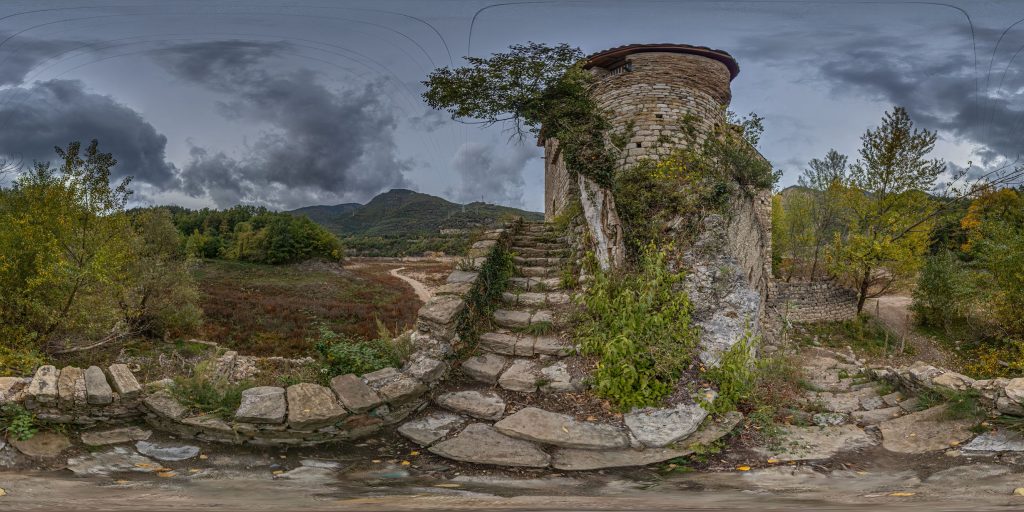
A 360-degree panoramic image at the abandoned Sant Salvador de la Vedella in Barcelona, Spain. Photo by Alex Edo
Welcome to a world of exploration and intrigue at Abandoned in 360, where adventure awaits with our exclusive membership options. Dive into the mysteries of forgotten places with our Gold Membership, offering access to GPS coordinates to thousands of abandoned locations worldwide. For those seeking a deeper immersion, our Platinum Membership goes beyond the map, providing members with exclusive photos and captivating 3D virtual walkthroughs of these remarkable sites. Discover hidden histories and untold stories as we continually expand our map with new locations each month. Embark on your journey today and uncover the secrets of the past like never before. Join us and start exploring with Abandoned in 360.
Do you have 360-degree panoramic images captured in an abandoned location? Send your images to Abandonedin360@gmail.com. If you choose to go out and do some urban exploring in your town, here are some safety tips before you head out on your Urbex adventure. If you want to start shooting 360-degree panoramic images, you might want to look onto one-click 360-degree action cameras.
Click on a state below and explore the top abandoned places for urban exploring in that state.
You might also like