St Lucie Driving Range: The Rise, Reinvention, and Abandonment of a Florida Practice Landmark
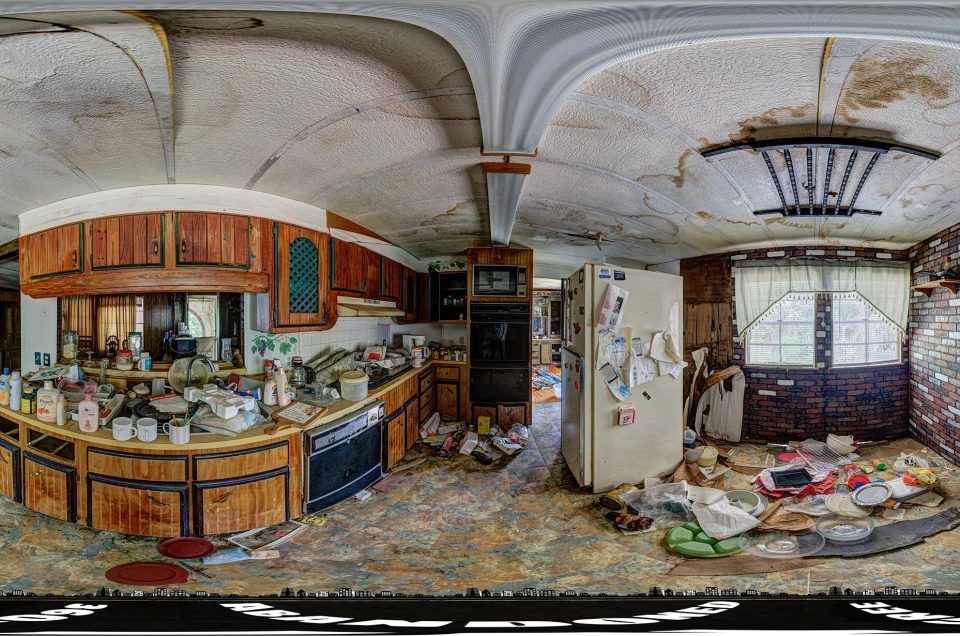
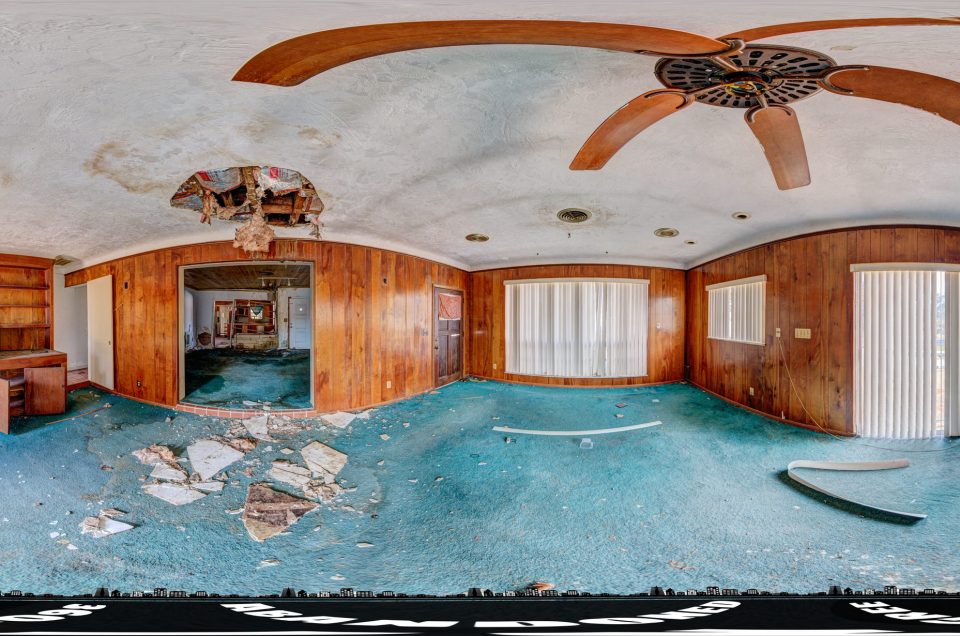
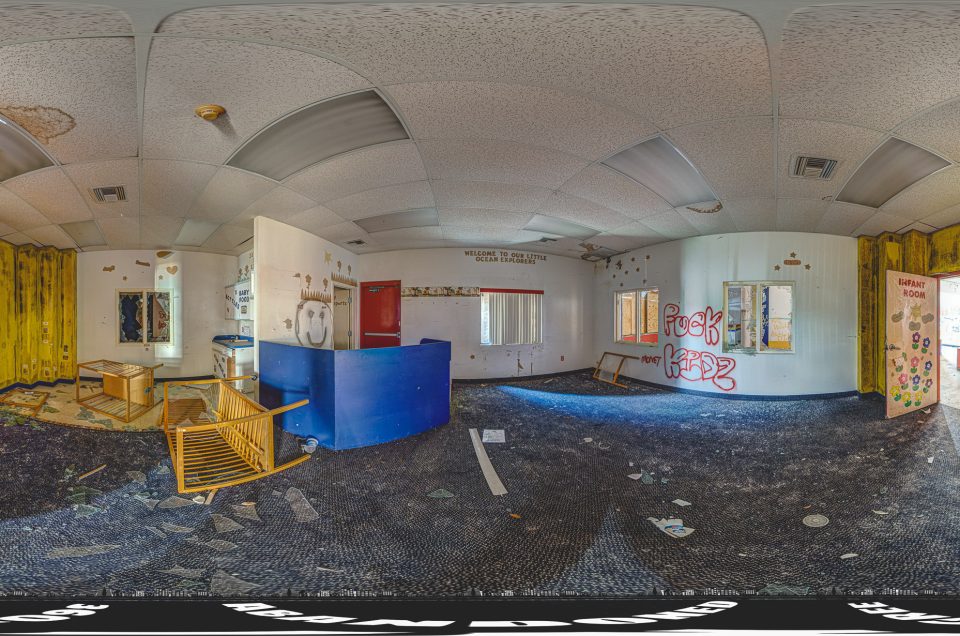
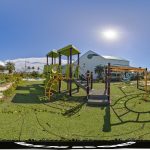
Take a closer look inside the St. Lucie Driving Range, a forgotten South Florida location that offers urban explorers a quiet glimpse into a place once built for practice, recreation, and everyday use. Through the panoramic images in the virtual tour below, viewers can study the remaining structures, open spaces, and signs of decay that now define this abandoned property.
This 360-degree virtual tour lets you explore the St. Lucie Driving Range at your own pace, moving through each scene and looking all around as if you were standing there in person. From weathered surfaces to the stillness of the surrounding landscape, each view helps tell the story of a once-active driving range now left behind in South Florida.
Click here to view it in fullscreen.
The story of St Lucie Driving Range is not the story of a grand resort, a famous course, or a country club with a polished legacy. It is the story of something more familiar and, in many ways, more interesting to urban explorers: a practical local place built for repetition, routine, and the ordinary rituals of sport. For years, golfers pulled off South U.S. 1, bought a bucket of balls, and worked on the same motion again and again under the Florida sun. It was a working range, not a fantasy world. That is exactly why its disappearance matters. Places like this rarely receive preservation campaigns or glossy retrospectives. They slip from active use into uncertainty, then into memory, and eventually into redevelopment. For people interested in urban exploring in Florida, those in-between places often say more about a region than its polished attractions ever could.
Set along South U.S. 1 in St. Lucie County, just north of Port St. Lucie, the site occupied roughly 16.7 acres with long highway frontage and a mostly cleared footprint. Later real-estate listings described it as one of the larger undeveloped parcels on that stretch of road, a fact that would become central to the range’s fate. The same listings also show how exposed the property was to development pressure long before the range finally disappeared.
For an abandoned in Florida story, that matters. Florida abandonment is often misunderstood as a simple tale of decay, hurricanes, or economic collapse. In reality, many sites vanish because the land beneath them becomes more valuable for something else. That is what gives abandoned golf infrastructure, practice facilities, and roadside recreation parcels their strange emotional charge. They were built for leisure, but they are consumed by growth. The grass, nets, hitting bays, and parking areas may look quiet and forgotten for a time, yet the true pressure usually comes from the market around them. St Lucie Driving Range fits that pattern almost perfectly.
What and where was St Lucie Driving Range?
At its most basic level, St Lucie Driving Range was a golf practice facility on South U.S. 1 serving the Treasure Coast market. Public golf directories place it at 6201 South U.S. Highway 1, and multiple directory listings identify it as a Port St. Lucie-area range with about 30 practice tees. Real-estate and MLS records place the parcel in unincorporated St. Lucie County/Fort Pierce mailing territory while also tying it to the Port St. Lucie market, which explains why the site shows up under both place names across different records.
That location helped define the site’s character. This was not an isolated recreational parcel deep in rural Florida. It was roadside, visible, practical, and easy to reach. It sat in the kind of corridor where passing traffic, convenience, and future land speculation all matter. In later sales language, brokers emphasized frontage, depth, zoning potential, and the possibility of a high-density multifamily conversion. In other words, the same location that made the range accessible to players also made it attractive to developers.
For urban explorers, that makes the site especially interesting. The most haunting abandoned places are not always remote hospitals or giant factories. Sometimes they are simple, open-air businesses that sat in full view of daily life until they no longer made economic sense. A driving range is also visually distinctive in decline. Even before total abandonment, there is a certain feeling to faded mats, weathered dividers, torn netting, tired signage, and an open field no longer sending golf balls into the distance. The emptiness is horizontal rather than vertical. The silence spreads out.
When was St Lucie Driving Range constructed and opened?
This is the part of the history that requires precision. The parcel’s public records, as reflected in later real-estate data, show a small on-site structure associated with a 1980 year built. That appears to refer to the existing built improvement on the property rather than the full practice range operation itself. The more solid business trail begins on January 2, 1997, when The Port St. Lucie Driving Range, Inc. was filed with the Florida Division of Corporations using the South U.S. 1 address. A Yellow Pages directory listing later described the business as having roughly 30 years in business, which lines up broadly with a mid-1990s opening. Based on the available public record, the safest conclusion is that the site’s physical built element dates to about 1980, while the range was operating in documented corporate form by 1997.
That distinction matters because abandoned-site histories often get distorted by repetition. Once one guessed opening year spreads online, it tends to harden into “fact.” Here, the evidence supports a more careful timeline. The structure appears older than the corporation, and the golf operation may even predate the filing by a short period, but 1997 is the earliest firm public opening marker tied directly to the business name and address. That gives St Lucie Driving Range a documented operating window of at least the late 1990s through the early 2020s.
If you are building an SEO-rich historical post for an URBEX audience, clarity like that matters. Readers interested in URBEX and urban exploring in Florida are used to seeing myths repeated as history. Giving them the most defensible timeline makes the story stronger, not weaker.
A modest Florida range, not a luxury golf destination
The cultural role of the range was modest, local, and useful. It was not competing with PGA-level facilities. Golf directories later listed it alongside larger and more elaborate Treasure Coast practice options, but St Lucie Golf Range remained the kind of place people visited to work, repeat, and improve. GolfLink listed the range with 30 practice tees, while later business review aggregators preserved customer remarks describing a layout that included both mats and grass. One review specifically praised the fact that part of the range allowed hitting from grass, which is a small detail but an important one if you are trying to picture the place as it functioned in everyday life.
That texture is important for reconstructing the site. Abandoned recreation sites can become abstract if you only write about their closure. To understand why a place lingers in memory, you need to know how it felt while alive. Here, the range seems to have been open-air, fairly straightforward, and valued precisely because it was unpretentious. It offered the essentials: tees, room to hit, instruction, and a physical layout that regular golfers could build into weekly habit. Even its later website and directory trail framed it as a “range and training academy,” not a resort experience.
That kind of place ages in a specific way. It is easier to imagine wear patterns than glamour: sun-bleached surfaces, patched equipment, repainted trim, fading lane markers, and the constant battle Florida businesses fight against humidity, rain, heat, and rust. For anyone drawn to the visual language of abandoned in Florida spaces, that is part of the appeal. A site like this was always in conversation with the climate, even before abandonment made that battle visible.
The pre-2012 range and its rougher reputation
One of the most revealing public snapshots of the site comes from a 2013 feature on former Yankees outfielder Ross Moschitto. That article says Moschitto took over the range in January 2012 and describes how he had known the place before that moment. In his recollection, the earlier version of the range was rougher: more dirt, poor mats, and a generally worn condition. The article also portrays the range as busy and updated under his management, suggesting that 2012 marked a meaningful reinvention rather than simple continuity.
That is a key turning point in the St Lucie Driving Range story. It tells us the range did not simply run unchanged from the 1990s into the 2020s. It went through phases. The first documented business era ended in Florida corporate records with the original corporation becoming inactive in 2000, but the range itself clearly continued in some form. By 2012, it had enough history for a new operator to describe it as an old familiar place that needed improvement. That suggests a long-lived local business with shifting ownership or management structures rather than a clean, uninterrupted corporate story.
For urban explorers, that layered history matters more than a single opening date. It means the site carried traces of several different lives: an older roadside range, a revamped instructional space, a school-linked training venue, and finally a redevelopment target. When you stand in a place like that after closure, you are not looking at one abandoned moment. You are looking at several eras collapsed into one landscape.
Reinvention under Ross Moschitto
Moschitto’s period deserves attention because it gave the range a more visible identity. The 2013 article presents him as a former professional baseball player who had shifted fully into the golf world and was devoting serious time to making the facility work. It explicitly describes the St Lucie Golf Range as busy and updated under his watch, and it connects the site to Swing Doctor Golf, suggesting a more instruction-oriented model than a basic bucket-of-balls stop.
That kind of reinvention makes sense for a practice facility in a competitive Florida market. A range cannot rely forever on location alone. It has to create reasons for people to come back: lessons, coaching, better turf, a more serious practice atmosphere, or a recognizable instructor. Moschitto’s own remarks about reworking the place from a rougher version into something more usable hint at exactly that kind of business logic. It also explains why the site kept turning up not just as a range, but as a teaching environment.
The significance for an URBEX audience is subtle but important. We often imagine abandoned places as static. In reality, many of them spent years fighting decline through adaptation. St Lucie Driving Range was not a passive failure. It was a place people tried to improve, repurpose, and reactivate. That effort is part of the story, and it makes the final loss feel more human.
Lessons, local practice, and training use
By the mid-2010s, the range was clearly functioning as more than a casual practice field. In 2014, Keiser University’s College of Golf wrote about students providing lessons to Savanna Golf Club members at the St. Lucie Driving Range, describing the lessons as a recurring activity. That places the range firmly inside the local instructional ecosystem. It was not just surviving; it was being used as a real teaching venue.
That role continued in later years. A coaching site for instructor Dan Maselli advertised in-person sessions at St. Lucie Golf Range, and a 2021 calendar entry from Tradition Preparatory High School scheduled golf practice at the address on U.S. 1. Those references matter because they show the facility remained active and relevant well into the early 2020s. When writing about St Lucie Driving Range, it would be wrong to portray it as a ghost from the distant past. It was still woven into local golf training networks long after its original 1990s corporate filing.
For readers interested in urban exploring in Florida, that compressed timeline makes the abandonment more compelling. This was not a giant relic left to rot for generations. It was a place used by students, golfers, coaches, and community members within very recent memory. That freshness changes the emotional atmosphere. Abandoned places feel different when you know a high school practice was held there not long before the silence set in.
The 2018 purchase and the training-academy phase
Another major turning point came in 2018, when Nation Christian Academy announced that it had recently purchased the St. Lucie Driving Range and that the site was undergoing a $75,000 renovation for use by the Nation Golf Academy. The announcement framed the range as a base for junior golf development, team training, and broader academy operations connected to multiple area courses and indoor training facilities.
That statement is important for several reasons. First, it confirms active investment in the site rather than neglect. Second, it shows the property was still being seen as operationally useful even while the land itself was becoming more valuable for redevelopment. Third, it helps explain why the range later appeared in forms like “St Lucie Golf Range and Training Academy.” Public event pages from 2019 also used that academy branding, which suggests the facility’s identity was being stretched beyond traditional driving-range use.
This is where the history becomes distinctly Florida. The site was at once a golf practice business, a training venue, and a redevelopment parcel. Those overlapping roles are common in fast-growing regions, where businesses keep operating even as long-term plans shift beneath them. For a while, St Lucie Driving Range managed to be both an active local facility and a future land play. That tension is often the real prelude to abandonment.
Real-estate pressure was building long before closure
The abandonment of St Lucie Driving Range makes the most sense when viewed through the property market. By June 2018, the parcel was already being marketed for sale, with broker language emphasizing its development potential. By March 2020, the site was still listed, and the marketing copy explicitly stated that it was “presently leased to a Golf Driving Range” on a month-to-month basis. That is an unusually revealing detail. It tells us the range was still operating, but on insecure ground. It was no longer the highest and best use in the eyes of the market.
That one sentence says almost everything an urban explorer needs to know about why such places disappear. Month-to-month tenancy on a highly visible 16.69-acre tract is not the foundation of long-term survival. Once a property is openly pitched for mixed-use or multifamily possibilities, the existing use begins to look temporary, even if customers are still showing up and balls are still flying downrange. St Lucie Driving Range did not have to fail as a golf facility in order to become vulnerable. It only had to be worth more as something else.
This is one reason abandoned recreational sites are so compelling in the Florida landscape. They often die in plain sight. There is no single disaster, no dramatic fire, no one-day shutdown that makes headlines statewide. Instead, the business keeps going while the land is being valued, packaged, and imagined as future apartments, retail pads, or storage. By the time explorers notice the silence, the economic decision was usually made long before.
Community use continued even as the clock was running
What gives the site its bittersweet quality is that public traces of activity continue almost to the end. Reviews preserved through business aggregators describe golfers using the range three and four years earlier, praising the value, the open feel, and the option to hit from grass. A 2021 school calendar placed student practice there. Other directory traces kept the business visible in the local golf ecosystem. Even a 2022 social-media snippet still referenced “St Lucie Golf Range… US1,” suggesting the place had not yet fully disappeared from active local conversation.
That continuity matters because it shifts the emotional tone of the abandonment. The range was not some ancient husk left from another generation. It was part of living routine. It had customers, students, and instructors close to the point of closure. For many URBEX readers, that is more affecting than grand ruins. Recent abandonment feels intimate. You can imagine the last lesson, the last bucket sold, the last time somebody tried to fix a net or repaint a sign believing the place still had time.
When abandoned places are this recent, their nostalgia is different too. It is less about a distant era and more about interrupted habit. That makes St Lucie Driving Range a strong subject for urban exploring in Florida content. It captures the uneasy line between “still here” and “already gone.”
Controversy in the final chapter
The late history of the range also includes controversy. In 2019, local coverage referenced state charges involving the operator and alleged alcohol sales without a license at St. Lucie Golf Range. Later, a 2024 report on Mike Woodbury described the site as the “now-closed St. Lucie Golf Range” and referred back to that charge. Those references do not tell the entire story of the business, but they do show that the range’s final years were not free of public problems.
It is important to keep that point in proportion. The controversy does not, by itself, explain the abandonment. The much stronger structural explanation is redevelopment pressure and eventual conversion of the parcel. But the controversy does matter historically because the user asked about scandals and significant late-stage events. It belongs in the record as part of the range’s final public image: not just a fading golf facility, but a site entangled with a more chaotic operator narrative.
For urban explorers, that adds another layer. Abandoned places often accumulate stories faster as they approach the end. Rumor, management conflict, permitting questions, police calls, and local gossip all start to surround them. Not all of that is reliable, which is why grounded history matters. In this case, the documented public record shows both redevelopment pressure and a measure of controversy. Together, they shaped the range’s final chapter.
So why was St Lucie Driving Range abandoned?
The best-supported answer is that St Lucie Driving Range was not abandoned for one single reason. It appears to have been pushed toward closure by a combination of land economics, redevelopment planning, and unstable late-stage operations. The strongest evidence comes from the redevelopment trail itself. Eden Multifamily identifies Eden Oaks as a 200-unit apartment redevelopment of the St. Lucie Golf Range, and property data tied to the address shows commercial new-construction permits for Eden Oaks were applied for in December 2023.
That is the clearest abandonment mechanism in the entire history. The range did not simply fade because nobody liked golf anymore. It occupied a large, highway-visible tract that could be monetized at a higher level through multifamily development. The land was marketed for years. The parcel sold for $1.8 million in February 2023. The development concept was active soon after. By early 2024, outside reporting was already referring to the range as closed.
That pattern is instantly recognizable across Florida. Recreational land on strong corridors becomes vulnerable when residential demand rises. In that sense, St Lucie Driving Range is both specific and representative. It is a real local story, but it also reflects a larger statewide cycle in which flexible land uses lose out to denser, more profitable development.
The redevelopment that replaced the range
One of the most striking details in the public record is how openly the next chapter was framed. Eden Multifamily’s project page does not merely imply a change of use; it states outright that Eden Oaks is a redevelopment of the St. Lucie Golf Range. The plan was presented as a three-story, Class-A, 200-unit garden-style apartment community. Real-estate permit data for the parcel also shows Eden Oaks applications in December 2023.
This is the moment when “abandoned” becomes complicated. For explorers, abandonment often feels final. But in land-use terms, abandonment can just be a transition zone. A site can look silent, overgrown, or half-forgotten while also being deeply active in paperwork, planning, and future investment. St Lucie Driving Range sits in that uneasy category. It became an abandoned place in the emotional and visual sense, but a redeveloped place in the economic sense almost immediately after.
That tension is useful for writing abandoned in Florida content because it prevents the story from becoming a simple ruin narrative. Florida destroys and rebuilds quickly. Many sites do not get the decades-long afterlife seen in rust-belt factories or remote institutions. Their “abandoned” phase can be short, partial, and highly unstable. That fleeting quality is part of what makes documenting them feel urgent.
What made the site compelling to urban explorers?
For a website aimed at urban explorers, the attraction of St Lucie Driving Range lies less in monumental ruin and more in type. It belongs to the category of abandoned everyday recreation. These places are powerful because they were woven into normal life. A driving range is built on repetition: same turn into the lot, same bucket at the counter, same warm-up, same line of targets under the same broad Florida sky. When a place like that goes still, the emptiness feels personal even if you never visited.
Visually, former golf practice sites also produce a distinct kind of decay. They are open rather than enclosed. Instead of corridors and wards or machine rooms and smokestacks, you get wide exposed space, leftover fencing, scattered structures, weathered turf, bare patches, and utility buildings that suddenly feel too small for the land around them. The scale becomes strange. A site meant for motion turns into a still field. That contrast is why low-key recreational ruins can be so memorable in URBEX photography and writing.
There is also a powerful class dimension here. St Lucie Driving Range was not elite golf. It was practice golf. Accessible golf. Instruction. Repetition. Improvement. Its abandonment says something about how even modest, useful spaces can disappear when corridor land becomes too valuable to remain modest.
Reading the range through Florida growth
Another reason this story works so well for urban exploring in Florida is that it reveals a broader regional pattern. Florida’s abandonment stories are often intertwined with growth rather than retreat. The state produces ghost motels, shut-down attractions, half-cleared residential tracts, storm-damaged commercial corridors, and recreational properties displaced by newer investment. In other words, abandonment here often happens beside prosperity, not in spite of it.
St Lucie Driving Range is a textbook example. The parcel was valuable because the surrounding region was growing. Marketing materials emphasized multifamily possibilities, frontage, traffic exposure, and changing land use. The replacement project leaned directly into that logic with a substantial apartment plan. The range did not become expendable because the corridor was dead. It became expendable because the corridor was alive in a different, more profitable way.
That makes the site historically significant even without national fame. It tells a true local story about the Treasure Coast in the development era: how sports infrastructure, open land, and highway frontage are reinterpreted over time. For readers interested in abandoned Florida places, that is the kind of history worth preserving before memory flattens it into “there used to be a golf place there.”
The operating period of St Lucie Driving Range
Based on the public record, the most defensible operating period for St Lucie Driving Range is documented from 1997 to at least 2021, with strong indications of activity into the early 2020s and closure confirmed by outside reference in 2024. The 1997 date comes from the original Florida corporate filing. The active end of the timeline is supported by the 2021 school practice listing, the 2022 social-media reference, and the 2024 description of the site as “now-closed.”
That means the range had a documented life of roughly a quarter century, and likely a little more if the mid-1990s business estimate and possible pre-corporate operation are taken into account. In practical terms, that is a substantial lifespan for a local recreational business on a changing Florida corridor. It lasted long enough to pass through multiple identities: a rougher old range, an updated teaching site, a training-academy venue, a month-to-month tenant on saleable land, and finally a redevelopment casualty.
For an SEO piece built around the keyword St Lucie Driving Range, that timeline is useful because it gives readers a complete arc rather than a vague sense of disappearance. It also keeps the history honest. Too many abandoned-site writeups jump straight from “built” to “ruined.” This place had a middle life, and that middle life matters.
A final way to understand the abandonment
The most honest way to frame the site is this: St Lucie Driving Range was abandoned not because it lacked history, but because its history stopped being the most valuable thing on the property. That is a hard truth, and it is one urban explorers encounter again and again. We are often drawn to the traces of labor, habit, and memory. Markets tend to be drawn to frontage, acreage, and zoning.
In that sense, the range’s afterlife as an abandoned subject is almost a second form of value. Once the buckets stop selling and the coaching sessions end, what remains is story, atmosphere, and documentation. That is where URBEX writing becomes useful. It rescues ordinary places from disappearing twice: once physically, and once from memory.
St Lucie Driving Range deserves that kind of preservation in words because it was exactly the sort of place that can vanish without ceremony. It was useful, local, imperfect, and easy to overlook. Those qualities made it ordinary in life and fascinating in disappearance.
Conclusion: why St Lucie Driving Range still matters
For readers searching St Lucie Driving Range, the most compelling truth is that this was never just a patch of land with tees and targets. It was a working slice of Treasure Coast golf culture with roots traceable to the late 1990s, a parcel carrying older built traces from around 1980, a site that was improved and repurposed more than once, and a business that remained active deep into the 21st century before real-estate pressure and late-stage controversy overtook it.
That makes it an especially strong subject for abandoned in Florida history and urban exploring in Florida writing. It was not a giant ruin. It was something more relatable: a place where people practiced, taught, talked, worked on their swing, and returned week after week until the future arrived in the form of listings, permits, and redevelopment plans. That is a Florida story. That is a URBEX story. And that is why the abandoned St Lucie Driving Range still deserves to be remembered.
Safety and legal note for explorers: if the site is fenced, posted, under construction, or privately owned, do not trespass. Observe from public space only and prioritize safety, heat awareness, and respect for current property rights.
If you liked this blog post, you might be interested in learning about the Denbigh Asylum in Wales, the Wish Upon A Star Daycare in Florida or the Saint Helena Parish Chapel of Ease Ruins in South Carolina.
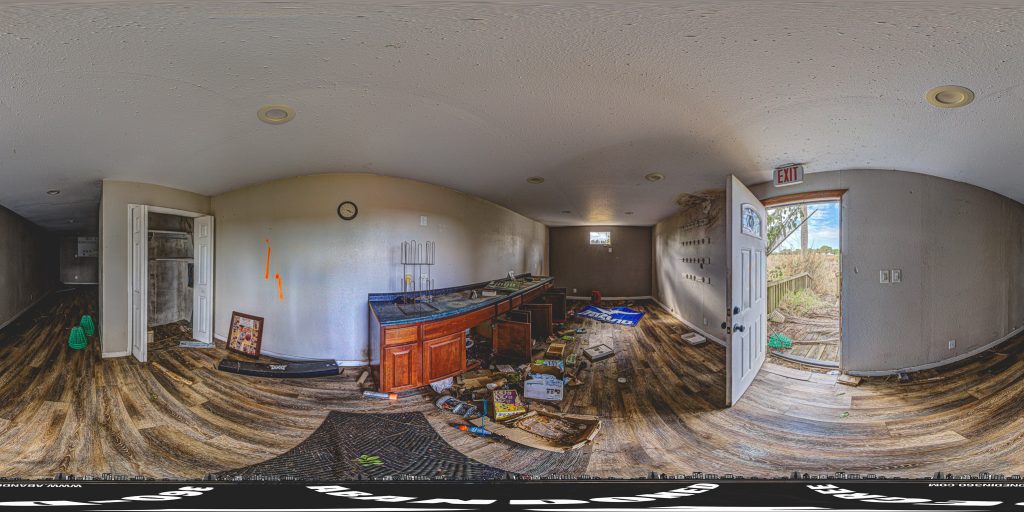
A 360-degree panoramic image captured at the abandoned St. Lucie Driving Range in South Florida. Photo by the Abandoned in 360 URBEX Team.
Welcome to a world of exploration and intrigue at Abandoned in 360, where adventure awaits with our exclusive membership options. Dive into the mysteries of forgotten places with our Gold Membership, offering access to GPS coordinates to thousands of abandoned locations worldwide. For those seeking a deeper immersion, our Platinum Membership goes beyond the map, providing members with exclusive photos and captivating 3D virtual walkthroughs of these remarkable sites. Discover hidden histories and untold stories as we continually expand our map with new locations each month. Embark on your journey today and uncover the secrets of the past like never before. Join us and start exploring with Abandoned in 360.
Equipment used to capture the 360-degree panoramic images:
- Canon DSLR camera
- Canon 8-15mm fisheye
- Manfrotto tripod
- Custom rotating tripod head
Do you have 360-degree panoramic images captured in an abandoned location? Send your images to Abandonedin360@gmail.com. If you choose to go out and do some urban exploring in your town, here are some safety tips before you head out on your Urbex adventure. If you want to start shooting 360-degree panoramic images, you might want to look onto one-click 360-degree action cameras.
Click on a state below and explore the top abandoned places for urban exploring in that state.
You might also like