Exploring the Abandoned Maximos Ranch in Cyprus – An Urban Explorer’s Dream
Step inside Maximos Ranch in Cyprus through a 360-degree virtual tour that gives urban explorers a closer look at this abandoned and weathered location. The panoramic images on Google Maps Street View let you scan the property from multiple angles, revealing the quiet decay, open spaces, and forgotten details that make this site so intriguing.
Use the interactive images below to explore Maximos Ranch at your own pace. Look around each scene, study the textures, and take in the atmosphere of a place that now stands as a striking reminder of how time, silence, and nature can transform a once-active destination.
Image by: Paphos Life
Hidden in the hills of Souni–Zanatzia in Cyprus lies Maximos Ranch, a once-grand equestrian estate now left to the whims of nature and time. This sprawling ranch – modeled after the horse farms of Middleburg, Virginia – was envisioned as a slice of the American Wild West on the Mediterranean island. For urban explorers, history buffs, and adventurers, Maximos Ranch has become a legendary site abandoned in Cyprus, offering a fascinating journey through decaying stables, overgrown arenas, and echoes of a dream cut short. In this blog post, we delve into the story of Maximos Ranch: the year it was built and opened, its heyday and activities, the reasons it was abandoned, and the lore that surrounds this unique place. With a friendly tone and a spirit of adventure, let’s explore this URBEX treasure step by step, uncovering secrets along the way.
The Origins of Maximos Ranch – An Ambitious Dream
Maximos Ranch, officially known as “Rancho Appaloosa,” was the brainchild of a visionary Cypriot entrepreneur named Christos Maximos. Constructed and opened in the mid-1990s, the ranch represented an ambitious dream: to create an American-style horse ranch in the Cypriot countryside. The ranch was modeled after the famous horse farms of Middleburg, Virginia (USA), an area renowned for its rolling pastures, thoroughbred stables, and equestrian tradition. Bringing this inspiration to Cyprus, Christos Maximos aimed to introduce the same level of grandeur and rustic charm to the island.
Situated about 25 minutes from Limassol, on the mountain range of Kamenos Stavros above the Kouris Reservoir, the location was carefully chosen for its natural beauty. The ranch sat amidst the wine-producing villages of Pachna, Omodos, Koilani, and Agios Ambrosios – an area of picturesque valleys and pine forests. Visitors driving up to the estate would travel along the old Limassol–Platres road, passing through landscapes of carob trees and vineyards, before turning onto a private road leading to the ranch. Even the approach to Maximos Ranch was designed to impress: a 1.2 km private road winding uphill, secured by double gated portals with electronic fingerprint scanners for access. In the evenings, the entire entrance road was lit for security, flanked by fences, and monitored by cameras – a high-tech setup for its time.
When construction was completed, Maximos Ranch officially opened its gates in the mid-1990s (exact records are scarce, but magazines found on-site date back to 1997, indicating the ranch was active by then). It was heralded as an “environmental sanctuary” in company brochures – a place where business interests and nature would co-exist. In fact, the ranch formed part of the Maximos family’s group of companies, meant to house some of their activities in a bucolic, countryside setting. Chief among these activities was the breeding of Appaloosa horses, famously known as the colorful, spotted horses originally bred by Native American tribes in the United States. The choice of Appaloosas was no accident; their legacy as the “horses of the American Indians” fit perfectly with the ranch’s Wild West theme and added an exotic touch to Cyprus’s equestrian scene.
From the start, Maximos Ranch stood out as one of the most extensive private ranch projects the island had ever seen. The estate sprawled over 27.46 hectares (around 68 acres) of land – a vast area by Cypriot standards. To put that in perspective, that’s roughly the size of 65 football fields of pastures, arenas, and facilities. The plan included not just horse stables, but also future expansion for a grand mansion on the hilltop. Indeed, the foundations were laid for a large log-cabin style mansion on the upper grounds, intended to give the owner a luxurious residence overlooking the ranch. However, this dream home was never completed – an omen of the unfinished story of Maximos Ranch. The ranch opened with only the equestrian facilities fully built, while the spot earmarked for the mansion remained an untouched plateau.
When Maximos Ranch was unveiled, it carried the hopes of becoming a multifaceted destination. Some envisioned it as a working ranch and stud farm; others saw potential for an exclusive resort or corporate retreat in the countryside. Early marketing material described the property as available to lease “as a ranch or for horse breeding”, suggesting that outside investors or organizations could rent the estate for their own equestrian ventures. In essence, Christos Maximos built the ranch as both a personal passion project and a potential business venture – a place where his family’s companies could entertain guests, breed elite horses, and perhaps even host events.
Little did anyone know that this ambitious dream would be painfully short-lived. For a brief period in the 1990s, however, Maximos Ranch thrived, garnering attention as a unique Western-style ranch in Cyprus. Locals and visitors alike were intrigued by the concept – it wasn’t every day that you’d find cowboys-at-heart riding Appaloosas on a Cypriot hillside! The stage was set for success, and the ranch’s story was just beginning.
Life and Activities at Maximos Ranch in Its Heyday
In its prime, Maximos Ranch was a hive of activity and a sight to behold. The core purpose of the ranch was horse breeding and equestrian training, focusing on the beautiful Appaloosa horses. The facilities reflected this focus: the estate featured an impressive array of infrastructure for horse care, riding, and even leisure.
At the heart of the ranch lay a large horse arena, measuring about 170 meters in length with a perimeter of 420 m. This oval track, enclosed by specially designed fencing, was perfect for exercising horses and hosting riding sessions. Whether it was for gallop training or casual rides, the arena was the center stage where horses and riders would daily trot under the Cypriot sun. Adjacent to the arena were multiple paddocks, divided into sections of about 850 m² each, where the horses could graze and socialize when not being trained. The design allowed segregation of horses if needed (for example, separating stallions or grouping mares and foals), indicating a professional setup akin to top ranches abroad.
Surrounding the main track, Maximos Ranch boasted several stables and barns to house a sizable number of horses. On the south side of the arena stood two quaint wooden stables, each built to accommodate a single horse and opening into a small private paddock. These cozy stalls might have been used for isolation (perhaps for an ill horse or a prized stud) or for visiting horses. On the north side, the ranch had two much larger stable buildings, each roughly 430 m², capable of sheltering 12 horses each – totaling space for 24 horses in those two alone. These big stables were robustly built with metal structures veneered in wood and topped with roofs shaped and colored like traditional tiles, blending functionality with rustic style. Inside, the stables were designed with horse safety and comfort in mind: walls up to 2 m high were lined with smooth cement blocks (to prevent injury from kicks), partition walls were concrete, and the upper areas had mezzanines for hay storage, complete with sprinkler systems for fire protection. This level of detail underscores how state-of-the-art the ranch’s equestrian facilities were for the time.
Nearby, there were additional structures to support the horse breeding operation. Between the large stables, an electronic horse scale was installed – useful for monitoring the horses’ health and weight. Behind the stables, a small auxiliary office with a private toilet (24 m²) was built, likely for the ranch manager or veterinarian to use for record-keeping and medical supplies. To the east of the stables, a huge metal storage shelter (216 m²) stood, with walls and mezzanine for hay storage, also equipped with sprinklers. This would have held feed, tack, and equipment. Just south of that was a specialized foaling stable (104 m²) – essentially a barn designed for mares giving birth and nursing foals. This foaling barn was sturdily constructed of reinforced concrete and plastered masonry, with a wooden roof, providing a quiet and safe space for welcoming newborn horses into the world. The inclusion of a dedicated foaling facility indicates that the ranch had serious plans for a breeding program, aiming to raise successive generations of Appaloosas on site.
One of the most unique features was the horse exercise amenities that went beyond the ordinary. To the east of the shelter, the ranch builders included a circular training arena with a mechanical lunging machine. A lunging (or lunge) ring allows a horse to be exercised on a tether in a controlled circle; having a mechanical aid likely means horses could be exercised even without a rider, trotting in circles for conditioning. And if that wasn’t impressive enough, there was even a horse swimming pool – a specially built pool where horses could swim for low-impact exercise! This pool, made of concrete, would have been used to train and rehabilitate horses, as swimming is excellent for building muscle without stressing joints. Such a facility is quite rare and cutting-edge for a private ranch, emphasizing how Maximos Ranch was equipped like a top-notch equestrian center rather than a simple farm.
Beyond the equine focus, Maximos Ranch had an array of other assets. The property was essentially self-sufficient and built for high-end country living. For instance, the estate had its own water supply system: water was pumped from a private well in Alassa village (about 5 km away) up to a massive 300-ton tank on the ranch. From this tank, a network of pumps distributed water across the ranch, feeding everything from the stables to irrigation. An emergency generator was on standby to automatically kick in if the mains power failed, ensuring the ranch never went dark. Meanwhile, electricity came via a dedicated sub-station nearby, so the facility had stable power for all its equipment. The entire perimeter of the ranch (all 2.7 km of it) was fenced off, not only to keep the horses in and intruders out, but also equipped with five water pumps along the fence – likely for fire-fighting or irrigation purposes given the expanse of land. Surveillance cameras (five of them across the grounds) kept watch, feeding into a security control room, and the front gate’s fingerprint-access system ensured only authorized folks came in. In short, the ranch was a fortress of modern ranching technology, blending luxury and security with rural charm.
Life at Maximos Ranch during its heyday must have been quite idyllic. The staff who worked and lived there were housed in comfortable quarters on-site, in a two-story lodging built of reinforced concrete and brick. This staff building had five bedrooms and four bathrooms on the lower level (along with a security control room, garage, storerooms, and even large walk-in refrigerators for food storage). On the upper level, there were two spacious apartments, each with its own kitchen, living room, three bedrooms and additional bathrooms. These accommodations suggest that a sizable team, possibly including horse trainers, veterinarians, stable hands, groundskeepers, and security personnel, stayed on the property full-time to keep the ranch running smoothly. They even had some amenities like a small recreation area or what appears to be a “gift shop” or lounge (explorers later found a room with shelves of trinkets and an old sign, hinting that perhaps visitors could buy souvenirs or that the ranch owners had branded merchandise).
During its operational years, Maximos Ranch buzzed with daily routines: horses being fed at dawn, trainers leading them to the arena for morning exercises, the sound of hooves on the track, and stable hands hauling hay bales into lofts. The ranch likely hosted occasional guests – perhaps business associates of the Maximos family or equestrian enthusiasts invited to witness the prized Appaloosas. One can imagine weekend gatherings where riders took horses out on the trails around the estate, enjoying panoramic views of Kouris Dam and the distant sea from the ranch’s high vantage point. Indeed, from the height of the ranch’s upper grounds, there was an “awesome” vista of the reservoir, the city of Limassol beyond, and the Mediterranean glittering on the horizon. It was a perfect backdrop for both work and play, encapsulating the romance of ranch life.
Maximos Ranch’s active period was relatively short, but in that time it made a name for itself in local lore. People spoke of it as “the ranch with the fingerprint gate” or “the place with American horses”, marveling at how such a place existed in Cyprus. It represented a fusion of cultures – American ranching know-how with Cypriot land and enterprise. This was the golden chapter of Maximos Ranch, when the facilities were new, the horses galloped strong, and the possibilities seemed as endless as the surrounding countryside. Unfortunately, the golden days would not last. Fate had a different course for this ranch, leading to a sudden and sorrowful turn of events that would leave Maximos Ranch frozen in time.
Abandonment: Tragedy Strikes the Ranch
Just when Maximos Ranch appeared to be on the path to thriving, tragedy struck and brought its operations to an abrupt halt. The exact timeline is a bit hazy, but those familiar with the ranch recount a fateful event in the late 1990s that spelled the end of Christos Maximos’s grand venture. The owner of the ranch, Christos Maximos, died in a tragic accident. This unforeseen loss of the driving force behind the ranch was a blow from which the enterprise would never recover. According to third-hand accounts (the story passed among locals and later relayed by urban explorers), the accident was sudden and devastating, leaving the family in shock. The nature of the accident isn’t widely documented – whether it was a car crash, an accident on the ranch, or something else – but its impact was absolutely clear. With the patriarch and visionary gone, the family no longer had the will to continue the ranch’s operation.
In the aftermath of Christos Maximos’s death, the Maximos family chose not to carry on with the ranch. Perhaps none of the heirs had the same passion for horse breeding, or perhaps the emotional weight of the place was too heavy without him. Running such a large facility would have required significant effort and expense, and it seems the family decided to close that chapter of their lives. Practically overnight, the bustling ranch fell silent. The staff likely were let go, and the estate that once echoed with the neighs of horses and hum of daily work started going quiet. This marked the beginning of Maximos Ranch’s life as an abandoned site.
Soon after, everything that could be salvaged or sold was stripped from the property. The family organized auctions to offload the valuable assets – after all, a ranch’s worth is largely in its horses and equipment. All the horses, including the cherished Appaloosas, were auctioned off to new owners. One can only hope they went to good stables and continued their bloodline elsewhere. The high-end equipment – perhaps tractors, vehicles, machinery – likely was sold too. Even furnishings and smaller items went on the auction block. The once luxurious staff quarters were emptied of useful appliances and furniture. What remained were the buildings and the land itself, now eerily devoid of the life they once nurtured.
For a time, there was an attempt to find a new purpose for Maximos Ranch. The Maximos Group’s website continued to list the ranch as available for lease, holding out hope that some investor or organization might want to rent the facilities. Imagine turning it into a riding school, or a wellness retreat, or even a themed resort – those possibilities were floated as the family sought a way to repurpose the property without directly managing it. The website described the ranch’s amenities in glowing terms and invited inquiries. However, no lease or sale ever materialized. The niche nature of the property and its remote location may have made it a tough sell. As years went by, the listings grew stale. By 2018, the official ranch webpage was finally taken down (the domain is still owned, but the content is gone), effectively marking the end of any active efforts to revive Maximos Ranch.
Thus, by the early 2000s, Maximos Ranch had entered its long period of dormancy. It’s estimated that the ranch was fully abandoned around 1999 or 2000, roughly 20 years ago from today. Indeed, those who explore the site now often find calendars, diaries or magazines left behind dating to the late 90s – silent witnesses to the last year of operation. The quick shutdown left many things in situ. Lights were turned off, doors were locked (at least initially), and the ranch was left to sit atop the hill, overlooking Kouris Dam like a modern ghost town.
Unlike many businesses that wind down gradually, Maximos Ranch’s end was precipitous. This abrupt closure, combined with its unique nature, has given the site a certain mystique. There were whispers and rumors in the local community: Why exactly did it close? Some speculated about financial troubles or mismanagement, but those who know the story point squarely to the personal tragedy of the owner’s death. There’s no indication of any scandal or wrongdoing behind the closure – it was simply a case of a dream dying with its dreamer. No major scandals are recorded in the history of Maximos Ranch; if anything, the scandal is that such a magnificent project was left to ruin. It stands as a poignant reminder of how fragile grand projects can be, hinging on the passion of one person.
A small silver lining emerged from this sad tale: not all of the ranch’s legacy was lost. In a touching footnote, it was reported that at least one of the Appaloosa horses from Maximos Ranch lived on for many years and even became a parent, extending the bloodline. Local horse enthusiasts were delighted to learn that a foal of Maximos Ranch lineage trotted in Cypriot pastures elsewhere, a living testament to the ranch’s brief glory. It’s a reminder that while the ranch’s buildings may have fallen silent, life found a way to continue beyond its fences.
With the ranch abandoned and unguarded, time and nature began to wield their influence in earnest. The next two decades would transform Maximos Ranch from a state-of-the-art equestrian facility into an evocative ruin. What happened to the site after abandonment is a story of slow decay, intermittent human interference, and the inexorable reclamation by Mother Nature.
Reclaimed by Nature: The Ranch Today
Walk through the gates of Maximos Ranch today (or rather, where gates once stood), and you step into a world where nature and decay have taken over. The ranch that was once manicured and maintained has become an urban explorer’s playground, changing a little more with each passing season. For years now, the site has been left largely unattended, and it shows. Yet, even in decay, the ranch exudes a haunting beauty that draws adventurers from near and far.
One of the first things you notice is how quiet and still it is. The only sounds are the wind rustling through wild grasses and the occasional distant bird call. The manicured lawns and neat riding tracks of yesteryear are long gone. In their place, undergrowth covers the roads and paths that once connected the estate. Weeds and brush have grown unchecked, softening the edges of the asphalt drive and even splitting it in places. The central arena, where horses once thundered around, is now a ring of overgrowth – thistles and shrubs poking up through the sand and soil. It requires a bit of imagination to picture horses racing there, as the track is now overgrown and barely discernible in parts.
Venturing deeper, you come upon the abandoned stables and buildings, standing in various states of disrepair. The structures are largely intact (thanks to solid construction), but years of weather and the absence of upkeep have taken a toll. Roof tiles on the clubhouse and stable buildings have slipped or been stolen, leaving gaping holes that sunshine (and rain) pour through. Peering inside the stables, you might find old hay still strewn in corners, now molded and part of the dirt floor. Spiderwebs drape from wooden beams, and the air carries that musty scent of long-disused barns. The once-gleaming metal bars of the stalls are rusted orange. In the foaling stable, graffiti tags and bits of trash hint that humans have passed through, but these incursions are relatively minimal – the ranch is remote enough that it hasn’t been thoroughly vandalized, aside from nature’s vandalism.
That’s not to say humans left it completely untouched. Over the years, scavengers and scrappers have certainly helped themselves to anything of value left behind. The estate had a lot of metal – and metal attracts “guerrilla recyclers,” as one explorer quipped. The evidence is everywhere. Manhole covers are missing from the private road, leaving hazardous open holes where they once were. These heavy iron discs were likely pried up and sold for scrap. The elegant electronic gates that guarded the entrance? They’ve been gradually dismantled and removed, again probably by scrap hunters. In fact, a second gate at the top of the hill (identical to the main one) was literally demolished piece by piece for its metal. Copper wires, light fixtures, plumbing – anything that could be taken and sold – has largely been stripped out of the buildings. What remains is the shell: concrete, bricks, and wood, which the scrappers had little use for.
Despite this pilfering, there’s still a lot left to see. In the staff quarters and offices, personal items and documents lie scattered, giving tantalizing glimpses into the ranch’s operational days. For example, urban explorers have found old betting magazines from 1997 piled in one room – perhaps the staff were sports fans who loved a flutter on the horse races. The yellowed pages of these magazines, printed in the late 90s when Cyprus still used the pound currency, transport you back in time. In another room, an old swivel chair sits in a corner, worn and dusty, as if someone might return to finish their paperwork (but of course, no one ever did). Calendars and diaries found on desks stop in the late 90s, the dates frozen and never flipped again. In what might have been a recreational lounge or small shop area, shelves hold a few forgotten trinkets and empty soda bottles, and a faded sign with the ranch’s name hangs crookedly – a relic of a more lively time.
One particularly poignant spot is the horse facilities. Walking through the stables, you might catch sight of old tack and horseshoes still lying about. In the storage barn, cracked plastic feed buckets and broken tools are strewn on the ground. The horse pool, once a place of vitality, is now a leaf-strewn basin of stagnant rainwater – perhaps occasionally visited by wild frogs or birds looking for a drink. The lunging ring stands empty, its fence partially collapsed, weeds climbing where horses once cantered in circles. And in the paddocks, nature has reclaimed dominion; wild grasses sway knee-high, and small saplings have taken root in what used to be trodden earth. It’s a bittersweet scene for any animal lover: you can almost hear an echo of a distant whinny or the clop of hooves on a distant memory.
Yet, even in decay, Maximos Ranch is stunningly picturesque. The Cypriot sun casts golden light on the old wooden fences in late afternoon, and the view from the hill is still as breathtaking as ever. Standing on the ridge near the unfinished mansion plot, you get that same panoramic vista of Kouris Dam, the surrounding hills, and Limassol afar – except now it’s framed by silence and solitude. The accommodation building, once full of life, now has broken windows that look like blank eyes gazing over the valley. “Only ghosts lurk in the accommodation now,” an explorer mused, seeing the empty halls where laughter and chatter once sounded. It indeed feels that way. Each room you tiptoe into, you wonder, Who lived here? What were their stories? and the ghosts of the past seem to whisper faintly.
Nature’s reclamation also means that wildlife has made the ranch its home. It’s not uncommon to flush out a partridge or see signs of foxes around the property. Lizards scurry over the sun-baked stones by day, and at night, perhaps barn owls roost in the rafters, just as comfortable as if it were still a working barn. The olive groves that were planted (all 1,500 olive trees the ranch boasted) have grown wild and gnarled, but they still produce olives that fall and carpet the ground each autumn – free harvest for the birds. Pomegranate and fig trees that once lined the property continue to bear fruit in season, their branches untamed. The whole ranch has a feeling of a place where human intention has given way to natural rhythm.
What’s remarkable is that despite two decades of abandonment, the ranch remains structurally quite sound in many areas. The high quality of construction that Christos Maximos invested in is paying a second dividend: it makes the site safe enough for explorers to wander without immediate fear of collapse (though one should always be careful). Many internal roads are still discernible and can even be driven with a sturdy vehicle (mind the missing manhole covers!). The main buildings – the clubhouse, staff quarters, stables – have cracks and some weather damage but stand firm. This durability means Maximos Ranch has endured as a time capsule, slowly aging but not erased.
For years, urban explorers in Cyprus have been drawn to Maximos Ranch like moths to a flame. It’s one of those places that gets mentioned in hushed, excited tones on explorer forums and social media groups: “Have you been to the abandoned ranch yet?” It offers a perfect mix of elements that urbex enthusiasts crave – a grand scale, a compelling backstory, artifacts left behind, and a relatively low risk of encountering security or hazards. In the next section, we’ll dive into why Maximos Ranch has become a highlight of urban exploring in Cyprus, and how to approach this site if you’re an intrepid explorer seeking adventure.
Urban Exploring in Cyprus – Maximos Ranch Awaits
If you’re an urban explorer (or as we like to say, an URBEX adventurer), Maximos Ranch is a must-visit location on the island of Cyprus. Over the years, it has earned a reputation as one of the most intriguing abandoned places in Cyprus for exploration. What makes it so special, and what should you know before you go on your own little expedition? Let’s set the scene for an urbex outing to Maximos Ranch.
First, getting there is an adventure in itself. The ranch is located near the Kouris Dam west of Limassol. The journey takes you through the scenic wine country mentioned earlier, and as you approach the dam, you might already feel a sense of anticipation. Just following the reservoir’s edge and climbing a dirt track into the hills gives a taste of the off-the-beaten-path excitement. The final approach is via that overgrown private road, which is partly paved but now riddled with gaps where drains have been removed. A vehicle can make it up (many explorers have driven in), but carefully – you don’t want to accidentally fall into a manhole void or scrape against the encroaching bushes. Alternatively, you can park by the main gate (or where it once stood) and hike up the road, which takes 10-15 minutes on foot. Along the way, you pass the foundation of the destroyed gate and the remains of lamp posts that once lit the lane. It really sets the mood: you know you’re entering a land that time forgot.
One reason Maximos Ranch is beloved in the urbex community is that it’s essentially a legal gray area that leans toward permissive. The land is private, but no one actively guards it or keeps people out at this point. There are no “No Entry” signs or locked fences remaining – in fact, as noted, the barriers are literally gone. Unlike some abandoned sites where you must sneak in or worry about trespassing, here you can mostly explore without hassle (of course, this isn’t formal permission, so one should always be respectful and discreet). Many explorers have reported that locals in the area are aware of the ranch and generally don’t mind curious visitors, as long as you’re careful and not causing damage. Always exercise common sense: daylight visits are safer; watch your footing in buildings; and of course, take only photographs, leave only footprints – the urbex motto.
As you wander the ranch, it’s easy to be swept up in an adventurous, almost cinematic feeling. The place lends itself to imagination. You might feel like you’re on a movie set of an Old West ghost town, transposed to Cyprus. Every corner turned reveals something interesting: a collapsed fence here, a rusted engine part there, a room full of old ledgers and files in the office that makes you feel like a detective piecing together clues. For photographers, Maximos Ranch is a dream. The interplay of light and shadow in the ruined interiors, the textures of peeling paint and creeping vines, and the grand outdoor vistas provide endless subject matter. Some explorers come armed with drones to capture aerial shots of the ranch from above – from the sky you can really appreciate how the abandoned ranch is being steadily reclaimed by nature, the once-clear outlines of paddocks and arenas now blurred with green.
Walking through the two-level staff quarters is often a highlight. Each bedroom or living space you peek into tells a mini-story. One might have a leftover family photo or a poster on the wall (signs that people truly lived there), another has a closet with coat hangers still hanging, swaying slightly in the breeze coming through a broken window. In the kitchen areas, you may find broken dishes, perhaps an old Cyprus newspaper used as shelf liner – browned with age – giving a date to the abandonment. The security control room still has an old panel board and some dangling wires; you can almost picture the CCTV monitors that once displayed feeds from around the ranch. It’s these small details that make urban exploration at Maximos Ranch so engrossing. It’s not just an empty shell; it’s a place where you can feel the presence of the past inhabitants and operations.
For those keen on photography and videography, Maximos Ranch offers a variety of scenes. Some visitors have even filmed short films or drone videos here, capturing the melancholic beauty of the site. (A quick search on YouTube reveals multiple urban exploring in Cyprus videos featuring Maximos Ranch, where explorers document their finds and the atmospheric landscape). One particular film shows a walking tour through the ranch in autumn, with a drone sweeping over the arena, illustrating how the ranch sits like a forgotten oasis in the middle of wild bushland. These videos and reports have only increased the site’s fame among adventure seekers.
While exploring, you might feel a mix of excitement and sadness. Excitement, because finding such a large abandoned complex is like hitting the jackpot – there’s so much to see and it truly feels like an adventure game in real life. Sadness, because as you piece together the story, you can’t help but empathize with the people who poured their hearts into this ranch. A once-energetic ranch now lies in stillness; a family’s dream now lies in dust. Many explorers come away with a reflective mood. “It’s very sad to see someone’s vision abandoned,” one visitor commented, staring at the vandalized nameplate and the empty barns. Indeed, Maximos Ranch evokes that emotional response – a blend of awe for what remains and lament for what was lost.
Safety-wise, if you go, take care as with any remote abandoned site. There are uneven surfaces, occasional sharp metal edges where things have been torn out, and possibly wildlife (don’t startle a sleeping snake in summer, for example!). If you venture into the underground water pump rooms or generator sheds, have a flashlight and watch your step. The structures are fairly stable, but upper floors in the staff house or certain wooden staircases might be risky – test them before trusting your full weight. Going with a friend is recommended for both safety and shared experience; plus, it’s helpful to have an extra set of eyes and a helping hand when navigating tricky spots.
As you conclude your exploration, perhaps around sunset, Maximos Ranch leaves a lasting impression. The golden hour light will make the stones glow and the long shadows of the derelict fences stretch across the ground. It’s beautiful in a wild way – the kind of adventure that defines urban exploring in Cyprus. You take one last look at the ranch from near the entrance, as the sky turns orange and pink. It’s easy to imagine, just for a moment, the sound of hoofbeats and laughter, as if the ranch is alive again. But as dusk settles, you’re reminded that those days are gone, and now the ruin belongs to the silence.
Conclusion: Legacy of the Lost Ranch
Maximos Ranch began as a grand dream – an attempt to transplant the spirit of the American West into the Cypriot hills – and for a short while, it flourished. Constructed in the mid-1990s and opened with high hopes, it offered Cyprus a unique slice of cowboy life and world-class equestrian facilities. Its operating duration was brief, only a handful of years in the late 90s, but in that time it carved out a place in local history and memory. The ranch’s activities – from breeding Appaloosa horses to hosting rides and tending olive groves – showcased what vision and resources could achieve. It wasn’t just the scale of the project, but the passion behind it, that made Maximos Ranch special.
The reasons for its abandonment are a somber reminder that life can change in an instant. The tragic death of Christos Maximos, the man behind the ranch, meant the loss of not only a beloved person but also the guiding force of the whole enterprise. Without him, the ranch’s heart stopped beating. Family members chose to let go of the project, liquidating what they could and moving on with their lives. There were no dark scandals, no dramatic showdowns – just grief and pragmatic decisions. In a way, that makes it even more poignant: the ranch wasn’t abandoned due to failure or folly, but due to fate.
Today, Maximos Ranch stands as a monument to impermanence. Its physical structures quietly tell the story of a vision that almost was – you can see the top-notch craftsmanship and planning in every beam and layout, yet also see how nature doesn’t discriminate between a humble cottage or a million-dollar ranch when reclaiming territory. In the cracks of the concrete, where little wildflowers bloom, there’s a sense that the earth is healing the scar of abandonment in its own slow way. For the community of urban explorers and locals, the site has transformed from a lost investment into a cultural artifact and adventure spot. Stories of expeditions to the ranch, photographs taken against the sunset, and accounts of “creepy sounds” heard in the stables at night all form a new folklore around Maximos Ranch.
The legacy of Maximos Ranch is thus twofold. On one hand, it’s a cautionary tale about the impermanence of human endeavors – how even the grandest projects can fall to ruin if circumstances turn. On the other hand, it has inadvertently become an educational and recreational treasure. School kids on field trips (the adventurous kind) have learned about local history and nature’s succession by visiting the ranch. Photographers have used it as a canvas for art. Travelers seeking the unconventional have added it to their itinerary to see a different side of Cyprus, beyond beaches and ancient ruins – here lies a modern ruin, equally compelling in its story.
There’s also a quiet hope that lingers in some hearts: could Maximos Ranch ever be revived? It’s not entirely impossible. The land is still valuable, the bones of the buildings still solid. Once in a while, rumors surface of investors eyeing the site for a resort or a new agricultural project. But as of now, those are just whispers in the wind that rustles through the empty paddocks. For the foreseeable future, Maximos Ranch remains as it is – a ghost ranch frozen in time, an open-air museum of 1990s ambition and architectural resilience.
As we conclude our exploration, we can’t help but feel a sense of respect and nostalgia. Maximos Ranch may be abandoned, but it is not forgotten. Through blog posts like this, YouTube videos, and word of mouth among explorers, its story continues to be told. Every visitor who walks its grounds adds another chapter – even if just a footnote – to that story. If you ever find yourself in Cyprus with a thirst for adventure, consider seeking out this hidden landmark. Stand under the Cyprus sky where horses once ran, touch the walls built by optimistic hands, and listen. In the silence, you might hear echoes of the past – a distant trot, a laugh, or the sigh of the wind through pine trees. Maximos Ranch has a voice if you’re willing to listen, and it speaks of dreams, loss, and the enduring allure of the unknown.
In the end, the abandoned Maximos Ranch is more than just an urban exploring in Cyprus hotspot; it’s a place that evokes reflection on human endeavors and nature’s reclamation. It reminds us that every ruin was once a thriving place filled with dreams. And as long as curious souls continue to wander its grounds, those dreams – and their lessons – live on in our collective memory. Maximos Ranch, the lost ranch of Cyprus, remains a testament to the adage that “not all who wander are lost” – some are just exploring the remnants of lost things, keeping their stories alive.
Maximos Ranch – from its hopeful start to its quiet demise – stands as a captivating chapter in Cyprus’s modern history. For urban explorers and adventurers, it offers an experience that is equal parts educational and thrilling. As you close this tale, may it inspire you to appreciate the stories behind other abandoned places and perhaps, one day, to go write your own chapter in the ruins of Maximos Ranch. Safe exploring!
If you liked this blog post, you might be interested in the abandoned Spitzer Castle in Serbia, the Mount Calvary Baptist Church in Florida, or the New Manchester Mill in Georgia.
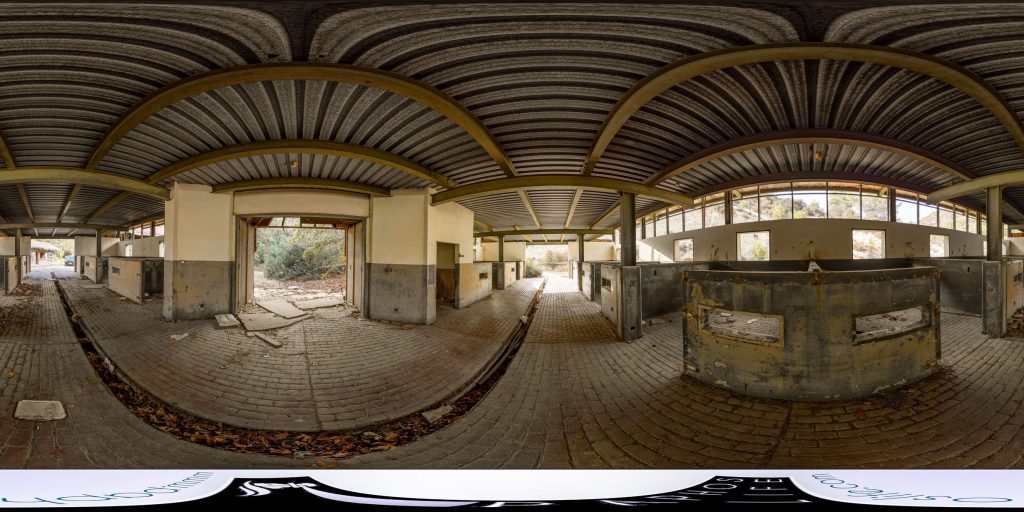
A 360-degree panoramic image at the Maximos Ranch in Cyprus. Photo by: Paphos Life
Welcome to a world of exploration and intrigue at Abandoned in 360, where adventure awaits with our exclusive membership options. Dive into the mysteries of forgotten places with our Gold Membership, offering access to GPS coordinates to thousands of abandoned locations worldwide. For those seeking a deeper immersion, our Platinum Membership goes beyond the map, providing members with exclusive photos and captivating 3D virtual walkthroughs of these remarkable sites. Discover hidden histories and untold stories as we continually expand our map with new locations each month. Embark on your journey today and uncover the secrets of the past like never before. Join us and start exploring with Abandoned in 360.
Do you have 360-degree panoramic images captured in an abandoned location? Send your images to Abandonedin360@gmail.com. If you choose to go out and do some urban exploring in your town, here are some safety tips before you head out on your Urbex adventure. If you want to start shooting 360-degree panoramic images, you might want to look onto one-click 360-degree action cameras.
Click on a state below and explore the top abandoned places for urban exploring in that state.
You might also like